We Stopped Waiting for Politicians to Notice Us. So We Invited Them In.
Here’s something we don’t say enough out loud: food banks were never supposed to be permanent.
They started as a stopgap. A bridge. A “just until things turn around” kind of solution. Forty years later, they’re not a bridge anymore, they’re infrastructure. And this year, Feed Ontario confirmed what we already see every week at our door: more than 1 million Ontarians turned to a food bank for help, and 1 in 4 of them are employed. Not unemployed. Not “not trying.” Employed, and still coming up short.
That’s not a food problem. That’s an income problem. And it’s exactly what September, Hunger Action Month, asks all of us to sit with.
What Hunger Action Month Is Really Asking Us to Do
Every September, Feed Ontario and food banks across the province mark Hunger Action Month with four asks: educate yourself, advocate, volunteer, and donate. Most years, we lean hardest on the last two because donations and volunteer hours are what keep the shelves full and the doors open, and we will never stop being grateful for that.
But this year at Clarington East, we decided to put real weight behind the word “advocate.” Because providing someone food is triage. Changing the policies that make foodbanks necessary in the first place, that’s the actual cure. And the people who can move those policies don’t live in a spreadsheet. They live in our riding. They hold office hours a few kilometres from our foodbank. So we asked ourselves: why are we only talking about them, instead of to them?
Why We Opened Our Doors to the People Who Make the Rules
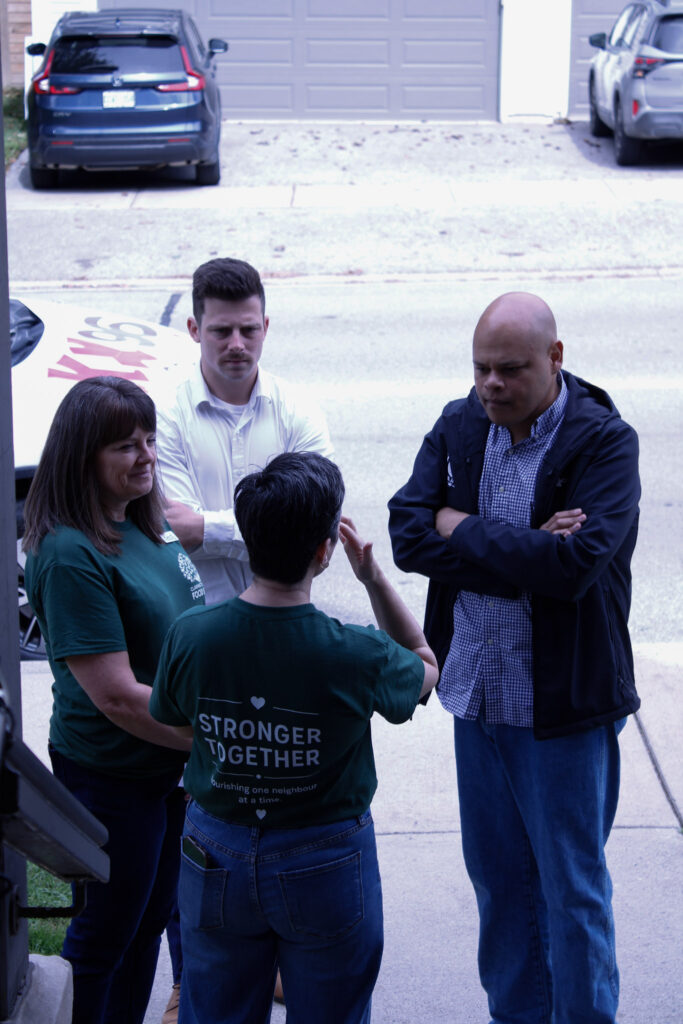
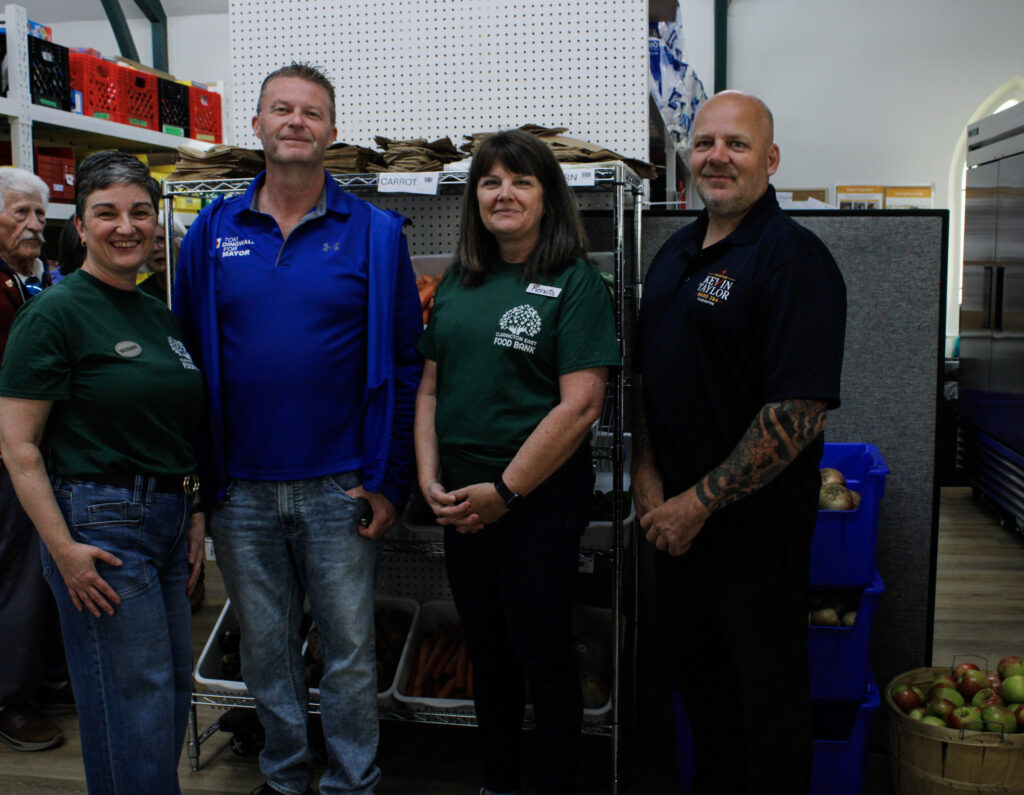
This fall, we hosted an open house and invited every candidate running in our municipal election, not to score political points, but to build the kind of relationship that outlasts any one campaign. We’ve noticed something encouraging since: local candidates and elected officials have actually started following and sharing our posts. That’s a small thing. It’s also exactly the kind of small thing that, over time, turns into a phone call getting returned or a meeting getting booked or, in this case, an MP walking through the door. MP Jamil Jivani, who represents Bowmanville, Oshawa North, came to our open house.
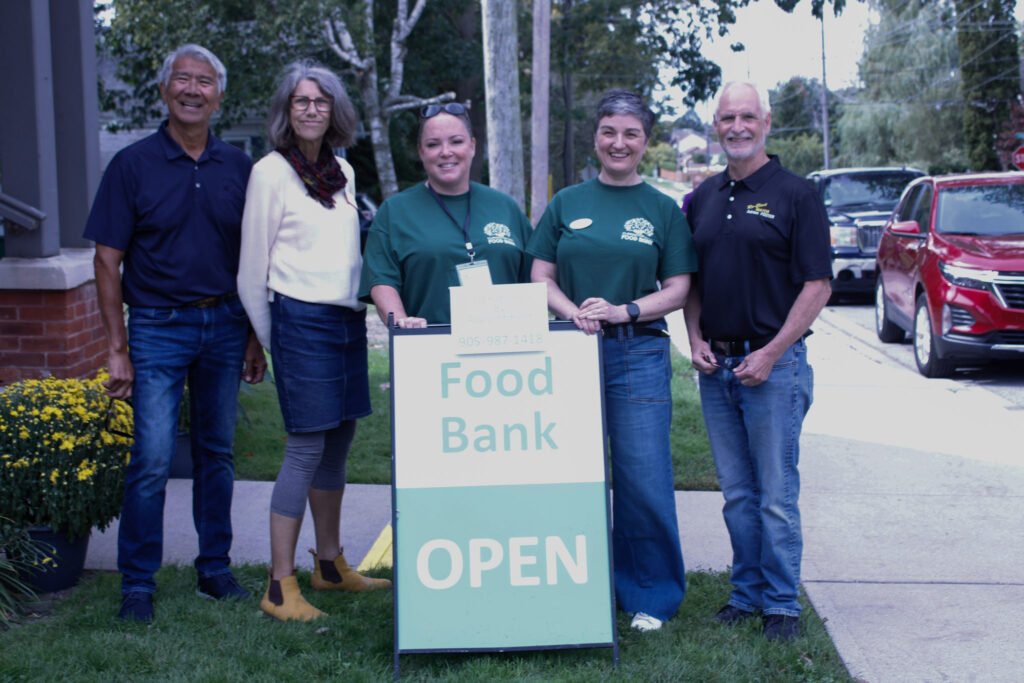
Our own municipal government showed up too — on both sides of the ballot. Mayor Adrian Foster, Regional Councillor Willie Woo (Wards 3 & 4), and Councillor Margaret Zwart (Ward 4) came through, alongside candidates running for office this fall: Tom Dingwall (Candidate for Mayor), Kevin Taylor (Candidate for Regional Councillor, Wards 3 & 4), and Denise Robinson (Candidate for Local Councillor, Ward 4). Whoever Clarington voters send to the council table this October, we wanted every one of them to have already walked our floor and met our neighbours.
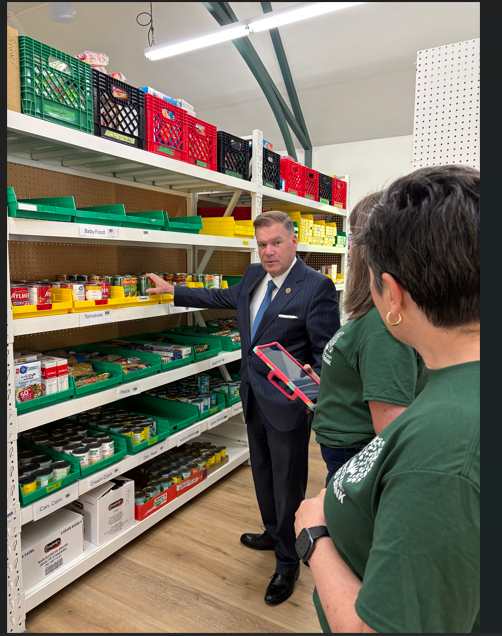
The day before, MPP Todd McCarthy, who represents Durham and serves as Minister of Environment, Conservation and Parks, came through for a full tour of the food bank. Not a photo-op at the front desk. A real walk through our space, seeing exactly what it takes to get food from a donation bin into a family’s hands.
We’re not stopping there. On October 23rd, MPP David Piccini, who wasn’t able to make it to our open house, is coming to see us directly, alongside a representative from Feed Ontario. Two people who help shape provincial policy, standing in our foodbank, hearing directly from the neighbours we serve. That’s the whole point.
And that circle is already widening, this time at the federal level. Hunger doesn’t respect jurisdiction. It shows up in provincial income support policy, in federal housing and grocery affordability decisions, and in municipal transit and zoning choices, all at once. So having an MP in the room alongside our MPPs matters, because the families walking through our doors don’t get to pick which level of government failed them this month.
The Municipality Rolled Up Its Sleeves Too
The Municipality of Clarington didn’t stop at showing up — they put their own food drive behind Hunger Action Month this year, helping us get the word out that this is a community-wide responsibility, not just a food bank problem to solve quietly in the background.
If you’d like to be part of that, here’s how: donations can be dropped off at three locations across our community —
- Diane Hamre Recreation Complex
- Newcastle Public Library
- Orono Public Library
Every non-perishable item that comes through those doors is one less thing a family has to choose between buying and going without this month.
The Numbers That Make This Personal, Not Political
We don’t have to point past our own front door to make this real. This year, more than 5,000 visits were made to Clarington East Food Bank, up from 3,979 the year before,more than a 24% increase. We support over 753 individuals, including 282 children, across 259 households (up 29%, 34%, and 28% respectively from the year before).
Here’s the number that stopped us in our tracks: 29% of the households we served this year had never needed a food bank before, nearly double the 15% we saw the year prior. That’s not a statistic about “other people.” That’s a neighbour, a coworker, someone who never expected to be standing in our lineup, showing up for the first time.
And this isn’t just a Clarington story. Feed Ontario reports that 2025 marked the ninth consecutive year of rising food bank use across the province, over 1 million Ontarians, 8.7 million visits, the highest on record. Food Banks Canada’s national HungerCount recorded nearly 2.2 million visits in a single month this past spring, also the highest ever recorded.
And here’s the part that should stop anyone in their tracks: food insecurity, here in Clarington and everywhere else in Ontario, increasingly has nothing to do with bad decisions. It’s a coworker. A neighbour two doors down. Someone with a job, a lease, and a lunch bag with nothing to put in it come the third week of the month.
What We’re Asking Of You This September
You don’t need an appointment with an MPP or a seat at a fundraiser to take action this month. Here’s where to start:
- Educate: Feed Ontario’s “Hunger in My Riding” tool shows exactly how food bank use has changed in our community, worth five minutes of anyone’s time.
- Advocate: Send a note to your municipal, provincial, or federal representative. Tell them food insecurity is something you’re watching them on. You don’t need a script, you just need to show up as a voter who’s paying attention.
- Volunteer: Our shelves don’t sort themselves, and our hampers don’t pack themselves. If you’ve got a few hours, we’ve got a spot for you.
- Donate: Drop off non-perishables at the Diane Hamre Recreation Complex, Newcastle Public Library, or Orono Public Library, or donate directly with us. Every dollar still does more for us than most people expect, because of the partnerships and bulk purchasing we can access as a food bank.
The Belief Underneath All of This
We’ve said it before and we’ll keep saying it: we believe in a hand up, not a hand out. That belief doesn’t stop at our front counter. It’s why we hand a family a gift card instead of a pre-packed box, and it’s exactly why we’re handing our elected officials, and our whole municipality, a firsthand look at what’s happening in their own backyard instead of just a statistic in a briefing note.
Hunger Action Month is about refusing to let hunger become an invisible, background noise that everyone’s gotten used to. We didn’t get used to it. And this September, we made sure the people with the power to change it couldn’t get used to it either.
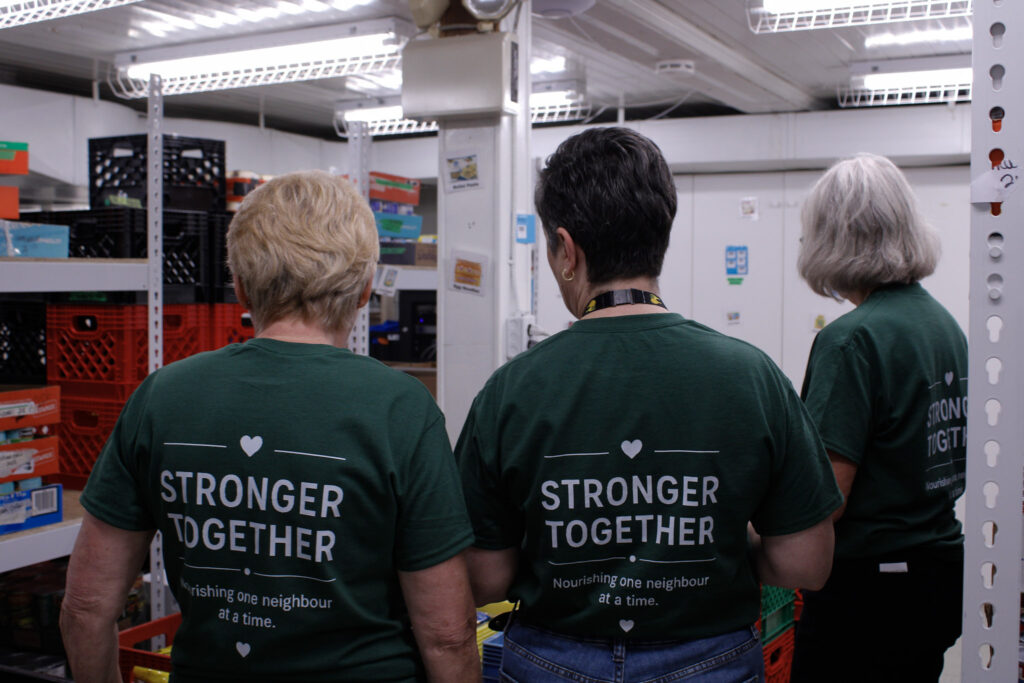
Clarington East Food Bank believes our neighbours deserve dignity, not just charity and that lasting change means showing up in council chambers and Queen’s Park, not just in our foodbank. This Hunger Action Month, we’re doing both.